Coffee beans of the world: a practical guide
Understand coffee species, varieties, origins, and processing—and learn how to read a coffee label before choosing your next bag.
What does “type” actually mean?
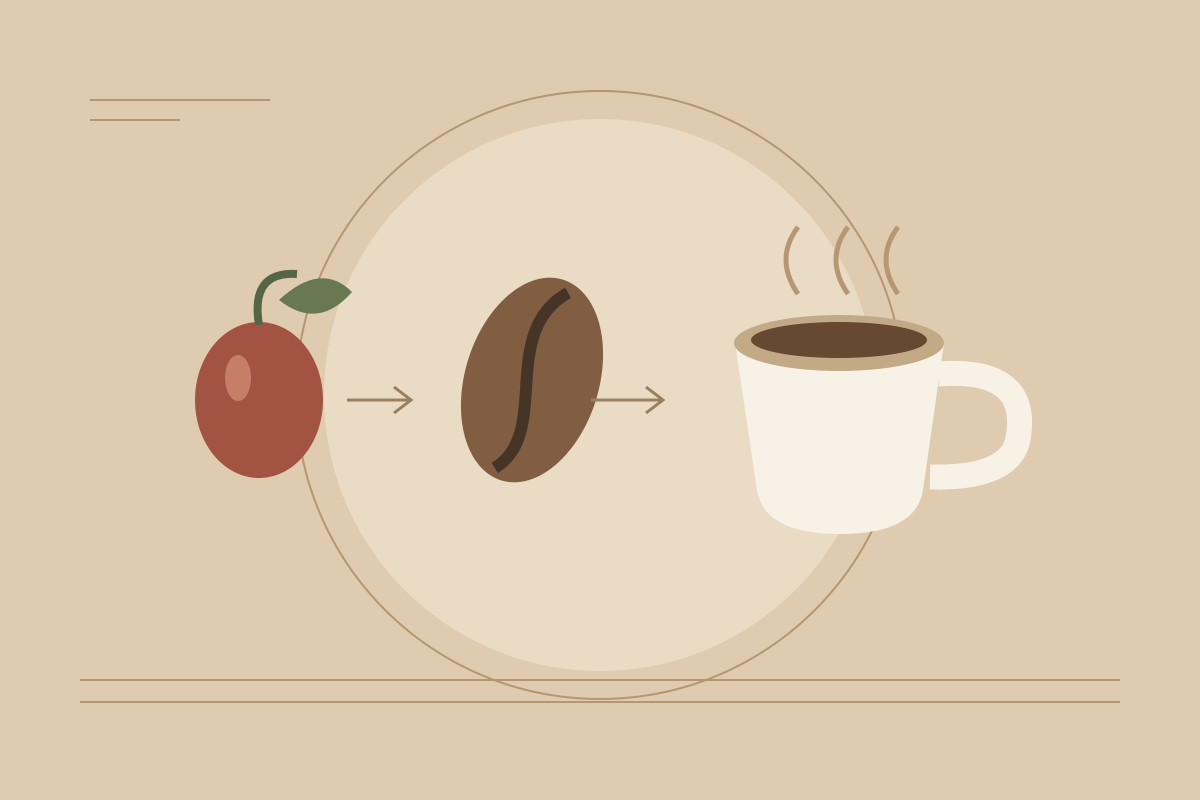
Coffee beans are the seeds inside coffee cherries. A label may describe the species, such as Arabica; the cultivated variety, such as Bourbon; or the origin, such as Ethiopia. Espresso is a brewing method and dark roast is a roasting level, not a botanical type. Start with these distinctions rather than treating every name as a separate kind of bean.
The main species and varieties
Arabica and Robusta dominate commercial production. Liberica and coffees sold as Excelsa are less common; wild species such as stenophylla and eugenioides rarely appear in ordinary retail. Arabica includes Typica, Bourbon, Gesha, Caturra, Catuai, SL28, SL34, and many modern hybrids. This is a map of the main commercial groups, not a claim to list every wild species or genetic selection.
Read the bag, then taste
Look for the country, region, variety, processing method, and roast date. Notes such as citrus or chocolate describe sensory impressions, not necessarily added ingredients. Buy a small bag first and record the grind, water ratio, and result. Brew two coffees with the same method before attributing every difference to variety or country: processing, roast, storage, and water can all change the cup.
Further reading & sources
From reading to your next cup
Explore the coffees currently available and discover the origin and processing details for each bag.
Explore our coffee